
Study Shows Medical Students Undertrained but Overconfident on Nutrition
-
Table of Contents
- Medical Students’ Nutrition Training: Overconfidence Despite Undertraining
- The State of Nutrition Education in Medical Schools
- Overconfidence Among Medical Students
- Consequences for Patient Care
- Case Studies and Statistics
- Improving Nutrition Education in Medical Schools
- Conclusion
- ETChem’s Protein Products: A Nutritional Asset for Medical Professionals
Medical Students’ Nutrition Training: Overconfidence Despite Undertraining
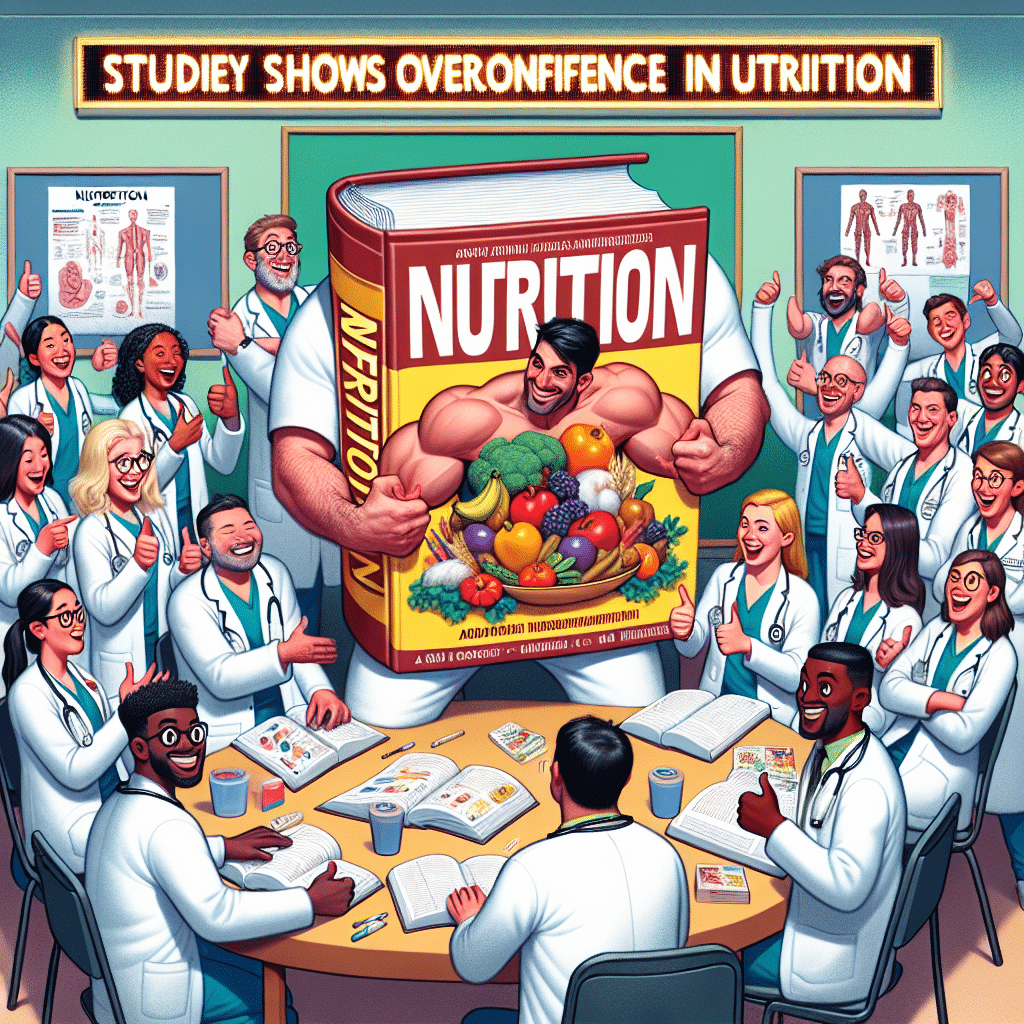
Recent studies have raised concerns about the adequacy of nutrition education in medical schools, suggesting that while medical students may be confident in their nutritional knowledge, they are often undertrained. This discrepancy has significant implications for patient care, as physicians are expected to guide patients in making informed dietary choices to prevent and manage chronic diseases. This article delves into the current state of nutrition education for medical students, the consequences of overconfidence paired with undertraining, and the importance of comprehensive nutrition training in medical curricula.
The State of Nutrition Education in Medical Schools
Nutrition is a fundamental component of health and wellness, yet it remains an underemphasized area in medical education. A study published in the Journal of Biomedical Education revealed that a majority of medical schools worldwide do not offer adequate nutrition education. The recommended 25 hours of nutrition-related coursework is not met by most institutions, leaving future physicians ill-equipped to handle diet-related health issues.
- Many medical schools offer less than the recommended 25 hours of nutrition education.
- Curricula often lack integration of nutrition topics into clinical practice.
- Students receive limited hands-on experience with diet assessment and counseling.
Overconfidence Among Medical Students
Despite the gaps in their education, medical students often exhibit a high level of confidence in their nutritional knowledge. This overconfidence can be attributed to several factors, including the Dunning-Kruger effect, where individuals with limited knowledge overestimate their competence. Overconfidence may also stem from a lack of awareness about the complexity of nutrition science and its application in clinical settings.
- Overconfidence can lead to the dissemination of incorrect dietary advice.
- It may hinder the physician’s ability to recognize personal knowledge gaps and seek further education.
- Patients may be less likely to consult registered dietitians if they perceive their doctors as nutrition experts.
Consequences for Patient Care
The combination of undertraining and overconfidence in medical students can have detrimental effects on patient care. Physicians who lack proper nutrition education may not be able to recognize the role of diet in disease prevention and management. This can result in missed opportunities for early intervention and a reliance on pharmacological treatments over lifestyle modifications.
- Patients may not receive comprehensive guidance on diet-related health issues.
- There is a risk of perpetuating nutrition myths and misinformation.
- Non-communicable diseases such as diabetes and heart disease may not be effectively managed through dietary interventions.
Case Studies and Statistics
Case studies from various healthcare settings have highlighted the importance of nutrition knowledge among physicians. For instance, a primary care physician who received specialized training in nutrition was able to successfully reverse a patient’s type 2 diabetes through dietary changes alone. In contrast, a survey conducted by the American Society for Nutrition found that over 90% of cardiologists felt their nutrition education was insufficient, despite the critical role of diet in cardiovascular health.
- Case studies demonstrate the potential of nutrition-focused interventions in chronic disease management.
- Surveys reveal a widespread recognition among physicians of the need for better nutrition training.
- Statistics show that less than 14% of physicians feel adequately trained to provide nutrition counseling, according to a study in the Journal of the American College of Nutrition.
Improving Nutrition Education in Medical Schools
To address the issue of undertraining and overconfidence, medical schools must revamp their curricula to include comprehensive nutrition education. This should involve both theoretical knowledge and practical skills, such as dietary assessment and counseling. Additionally, interdisciplinary collaboration with dietitians and nutritionists can enhance the learning experience for medical students.
- Incorporate more hours of nutrition education into the medical curriculum.
- Use case-based learning to integrate nutrition into clinical practice.
- Encourage collaboration with nutrition professionals for a multidisciplinary approach.
Conclusion
In conclusion, the current state of nutrition education in medical schools is concerning, with students often being undertrained but overconfident in their knowledge. This has serious implications for patient care, as inadequate nutrition guidance can hinder disease prevention and management. To improve outcomes, medical schools must prioritize nutrition education and ensure that future physicians are well-equipped to address diet-related health issues. By doing so, they can foster a healthcare environment where dietary interventions are valued alongside medical treatments.
ETChem’s Protein Products: A Nutritional Asset for Medical Professionals
For medical professionals seeking to enhance their understanding of nutrition and provide better dietary recommendations, ETChem’s protein products offer a valuable resource. ETChem, a leading Chinese Collagen factory manufacturer and supplier, provides high-quality collagens that are essential for various bodily functions. Their products, which include marine, fish, bovine, chicken, and types I, II, and III collagen, are characterized by a neutral taste and instant solubility, making them ideal for incorporation into a balanced diet.
Medical professionals can recommend ETChem’s protein products to patients for various health benefits, including improved skin health, joint support, and overall wellness. By partnering with a reputable supplier like ETChem, healthcare providers can ensure that their patients receive top-tier nutritional supplements that complement their medical advice.
About ETChem:
ETChem, a reputable Chinese Collagen factory manufacturer and supplier, is renowned for producing, stocking, exporting, and delivering the highest quality collagens. They include marine collagen, fish collagen, bovine collagen, chicken collagen, type I collagen, type II collagen and type III collagen etc. Their offerings, characterized by a neutral taste, instant solubility attributes, cater to a diverse range of industries. They serve nutraceutical, pharmaceutical, cosmeceutical, veterinary, as well as food and beverage finished product distributors, traders, and manufacturers across Europe, USA, Canada, Australia, Thailand, Japan, Korea, Brazil, and Chile, among others.
ETChem specialization includes exporting and delivering tailor-made collagen powder and finished collagen nutritional supplements. Their extensive product range covers sectors like Food and Beverage, Sports Nutrition, Weight Management, Dietary Supplements, Health and Wellness Products, ensuring comprehensive solutions to meet all your protein needs.
As a trusted company by leading global food and beverage brands and Fortune 500 companies, ETChem reinforces China’s reputation in the global arena. For more information or to sample their products, please contact them and email karen(at)et-chem.com today.